A small living room on a budget can feel like a losing battle: every extra piece of furniture eats up floor space, and every “just add more storage” tip costs money you don’t have. The good news is that most of what makes a small room feel bigger has nothing to do with spending.
Before you buy a single thing, run through these seven free or nearly-free tricks designers reach for first.
1. Pull Furniture Off the Walls
Pushing every piece against the wall feels efficient, but it actually leaves a dead zone in the center of the room. Floating the sofa even six inches out and angling a chair toward it creates a real conversation area and makes the whole room feel used rather than just filled. It is the single most common layout mistake in a small living room on a budget, and also the cheapest one to reverse.
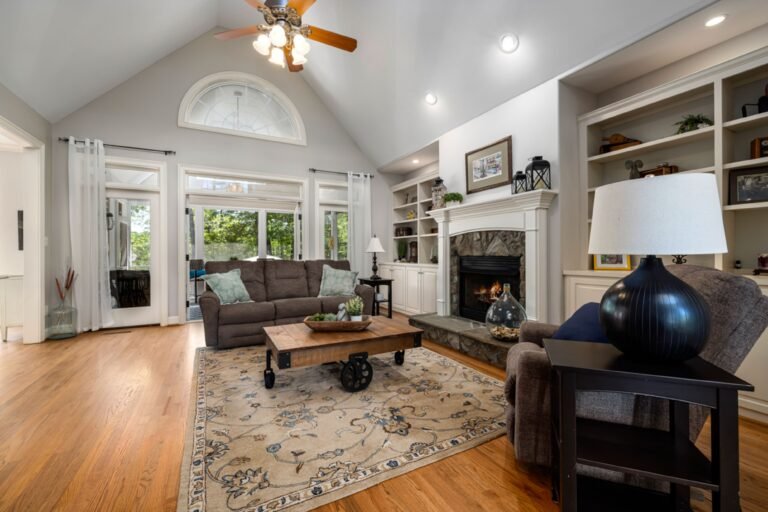
2. Use One Large Rug, Not Several Small Ones
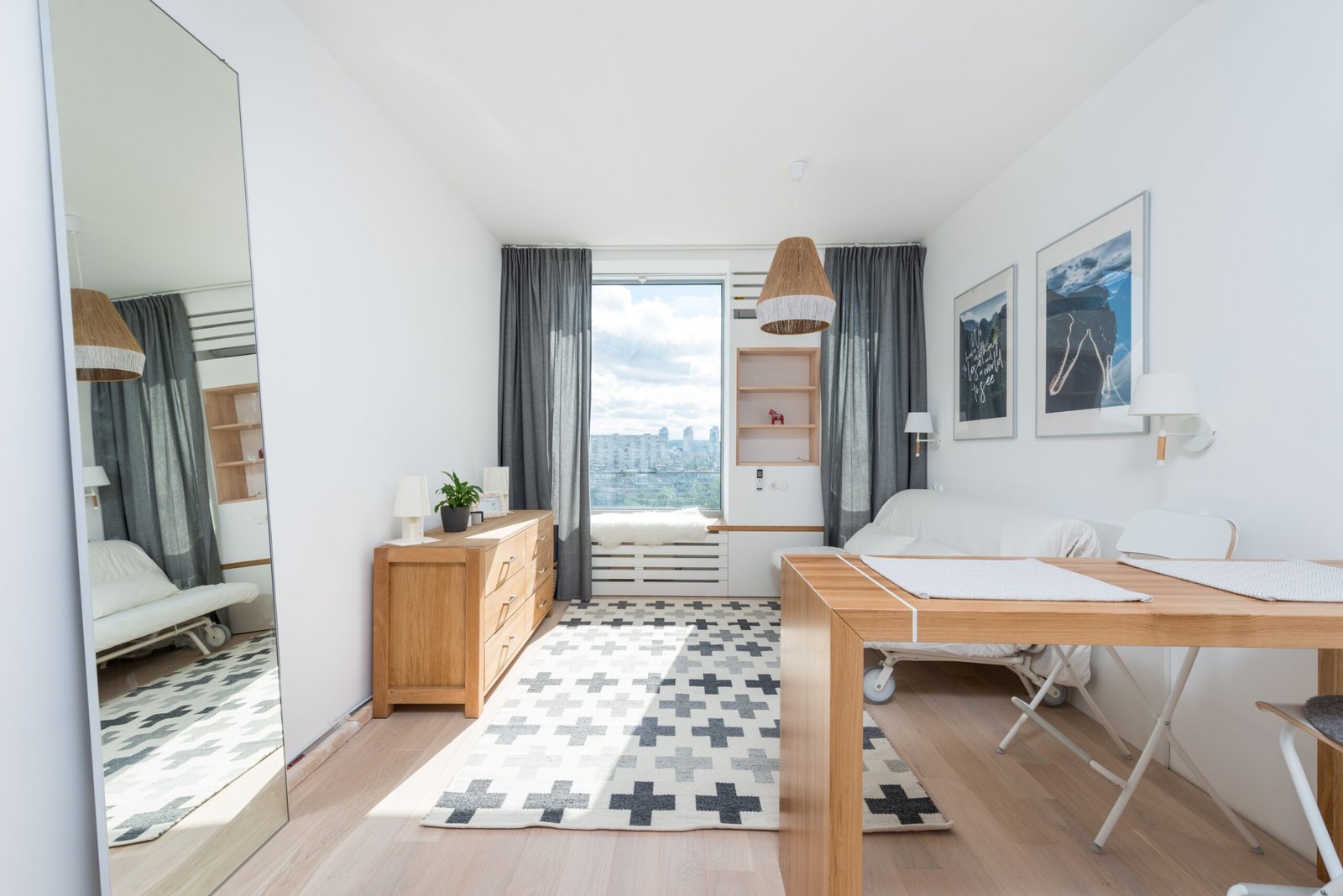
A single rug sized so the front legs of your main furniture rest on it visually ties the seating area together. Multiple small rugs chop the floor into disconnected patches, which reads as cluttered no matter how nice each rug is on its own.
3. Raise the Curtains Higher Than the Window
Hanging curtain rods closer to the ceiling rather than right above the window frame tricks the eye into reading the walls as taller. This costs nothing but a few extra screw holes and instantly opens up a small room. It is a favorite trick for stretching a tight budget precisely because it uses hardware most renters and homeowners already own.
4. Borrow, Don’t Buy, for Accent Pieces
A budget living room doesn’t need a full shopping trip. Swapping a lamp with a family member, repainting an old side table, or moving a piece from another room often solves a gap better than a new purchase would.
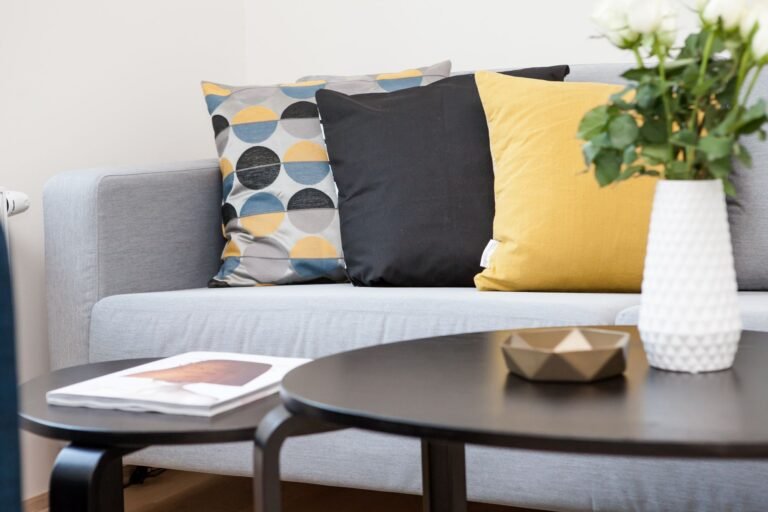
5. Keep the Color Palette Consistent
A room full of competing colors and patterns feels smaller and busier than one built around two or three repeated tones. Consistency reads as intentional, even when every piece in the room was acquired separately over time.
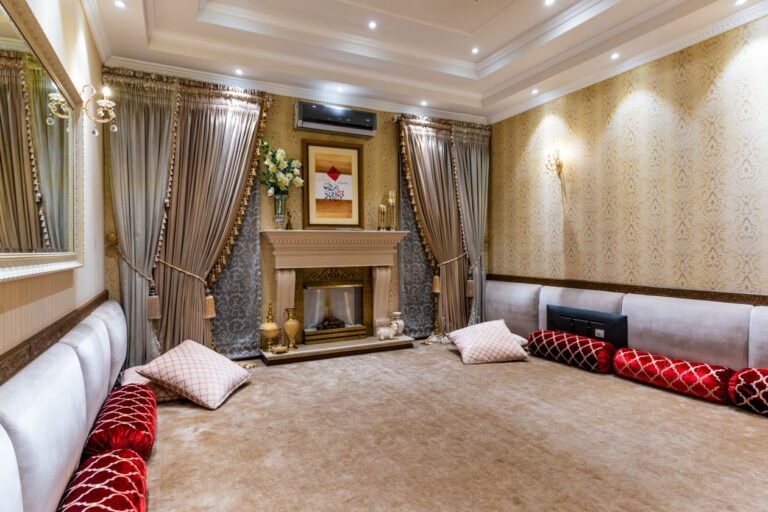
6. Add a Mirror Across from the Window
A mirror placed to reflect natural light doubles the sense of brightness and depth in a small space. It’s one of the cheapest tricks in the book and works in almost any room, regardless of style.
7. Edit Before You Decorate
Removing three mismatched accessories often improves a room more than adding one new one. A budget makeover is as much about subtraction as it is about shopping, and it’s the one step that costs nothing at all.
Why a Small Living Room on a Budget Feels Cramped
A small living room on a budget usually feels cramped for reasons that have nothing to do with square footage. Furniture pushed flat against every wall, several small rugs breaking up the floor, and low curtains that visually shrink the window are the real culprits, and every one of them can be fixed without spending money. The room itself is not the problem; a handful of small, reversible habits are.
The Bottom Line for a Small Living Room on a Budget
None of these seven changes require a big budget or a weekend project. Floating the furniture, consolidating rugs, and editing down accessories are changes you can make in an afternoon, and together they do more for a small living room on a budget than most purchases would. A cramped floor plan and a tight wallet are not the real obstacle here — a handful of habits are, and every one of them is free to fix this weekend.
For more room-by-room ideas, browse our living room and DIY projects guides, or see the American Society of Interior Designers for professional design resources.