
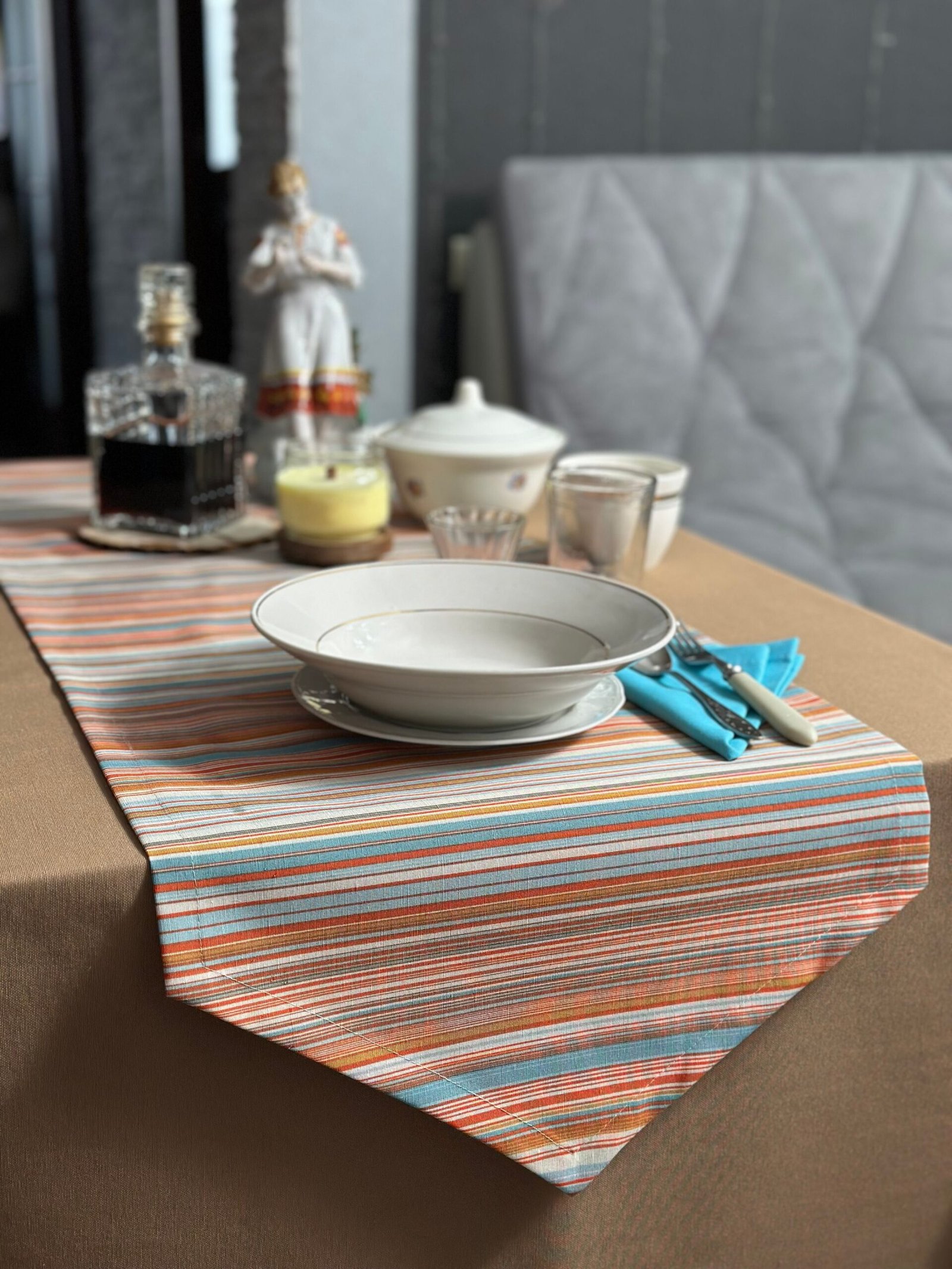
A table runner does more visual work than almost any other textile in the dining room, framing whatever centerpiece sits on top of it. Knowing how to style a table runner starts with getting the length and layering right before worrying about pattern or color.
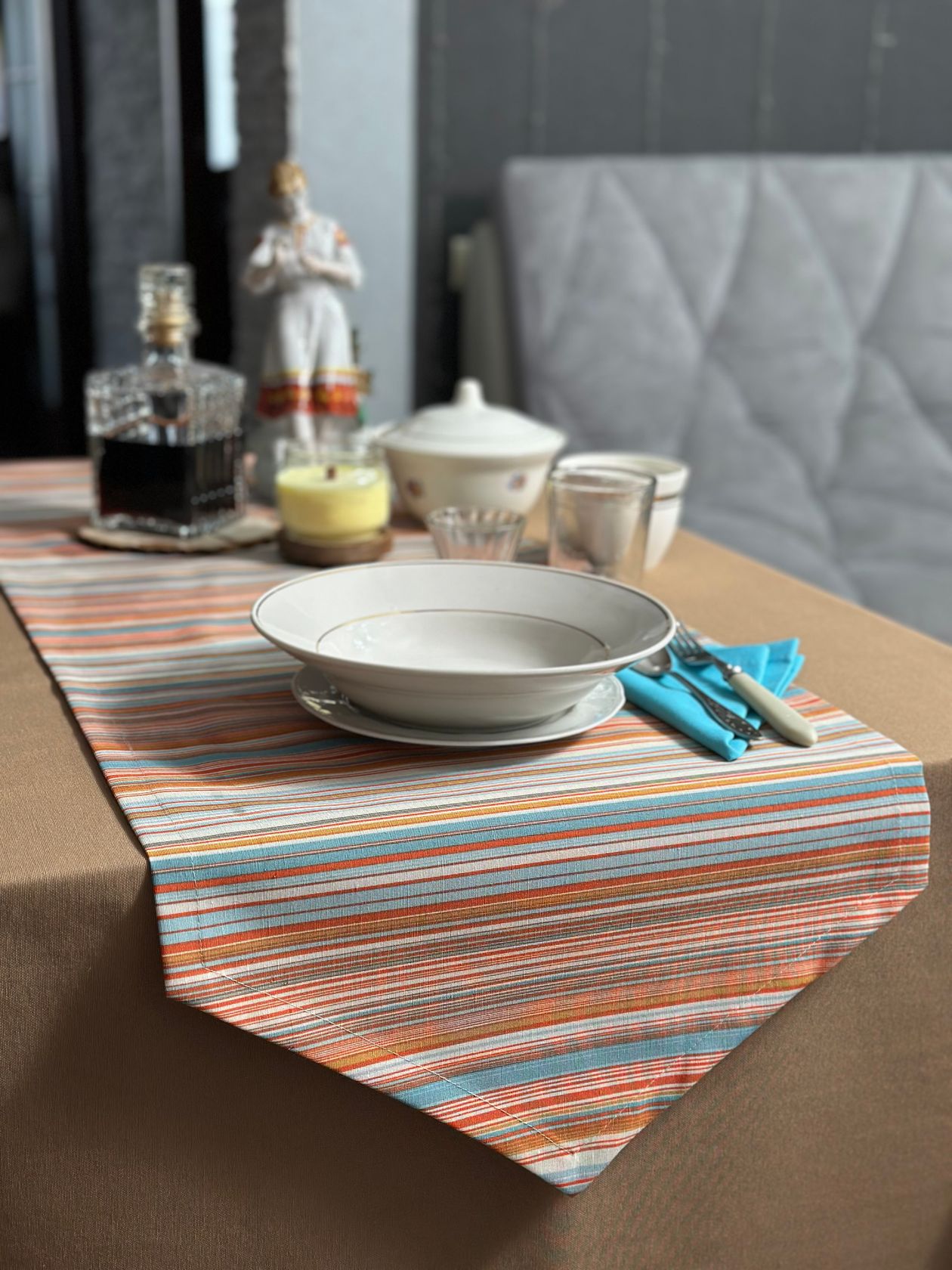
Getting how to style a table runner right takes only a few minutes once you know the pattern to repeat, and it makes a bigger difference than most people expect.
Why Proportions Matter More Than Pattern
A runner that’s too short or too narrow looks like an afterthought no matter how nice the fabric is. Getting the overhang and width right first means almost any pattern or color choice on top of it will look intentional.
How to Style a Table Runner by Season
| Season | Easy Swap | Quick Tip |
|---|---|---|
| Spring | Light linen in white or a soft pastel | Add a low centerpiece of fresh stems |
| Summer | Woven cotton or a striped pattern | Keep the table set a little more casual and airy |
| Fall | Warm plaid, rust, or a textured weave | Layer with a few gourds or a candle cluster |
| Winter | Deep-toned velvet or a metallic thread runner | Add greenery sprigs down the length of the table |
pair it with a fresh flower centerpiece
How to Get the Proportions Right
Aim for 6 to 12 Inches of Overhang
A runner should hang about 6 to 12 inches past each end of the table — shorter looks stingy, much longer starts to look sloppy.
Match Width to Table Width
A runner roughly a third of the table’s width keeps place settings visible on either side without feeling cramped.
Layer Instead of Cover the Whole Table
A runner works best as a layer over a bare table or a tablecloth, not as the only textile — it defines the center where a centerpiece or serving dishes go.
Common Table Runner Mistakes to Avoid
- Choosing a runner too short for the table: A runner that barely covers the middle of a long table looks unfinished — measure the table length before buying.
- Skipping a centerpiece on top: An empty runner looks incomplete — add even a simple low arrangement of candles or greenery down the center.
- Using a heavily patterned runner with patterned dishware: Pick one busy element — either the runner or the place settings — and keep the other simple.
- Ironing creases in the wrong direction: Iron along the runner’s length, not across it, to avoid awkward horizontal creases once it’s laid on the table.
For more inspiration, see Crate & Barrel’s table setting and runner guide.
Still not sure where to start with how to style a table runner? Pick just one small change from the ideas above — that’s really all a good puttering session takes.
FAQ
How long should a table runner be?
Plan for the runner to hang 6 to 12 inches past each end of the table for a proportional look.
Can I use a table runner without a tablecloth?
Yes — a runner over a bare wood or stone table is a common, simple look for everyday dining.
What width table runner should I buy?
Roughly a third of your table’s width is a safe standard, usually 12 to 16 inches for most tables.
Do I need a centerpiece with a table runner?
Not strictly, but a low arrangement of candles, greenery, or a bowl finishes the look and keeps the runner from looking bare.
How do I store a table runner between uses?
Fold along the same lines each time and store flat if possible to avoid deep creases from rolling or stuffing it in a drawer.
Wrap-Up
The short version of how to style a table runner: aim for 6 to 12 inches of overhang, keep the width to about a third of the table, and layer a simple centerpiece on top to finish it.
Looking for another easy refresh? and see our mantel styling guide for the same seasonal color ideas next.



One thought on “The Best Way to Style Table Runners for a Stunning Refresh”