
Understanding inverter generator disadvantages before spending your hard-earned budget on emergency power equipment is essential for protecting your household during a major grid outage. While modern inverter technology delivers exceptionally clean electricity and quiet operation, these units come with strict mechanical limitations, steep financial investments, and restricted peak output thresholds. Carefully evaluating these inverter generator disadvantages helps prevent costly purchasing errors when preparing your home for sudden weather emergencies.
Many homeowners assume a compact digital unit can seamlessly run an entire house during a blackout. However, failing to study inverter generator disadvantages beforehand leaves families without sufficient running wattage for heavy appliances like central air conditioners, deep well pumps, and electric water heaters. Before browsing our what-to-buy recommendations, you must know what these compact generators can and cannot accomplish under realistic emergency conditions.
Inverter vs Conventional Generator: Core Operational Differences
The fundamental difference between conventional and inverter generator engineering lies in how electrical current is produced and modulated. A conventional open-frame generator uses a fixed mechanical engine that spins an alternator at a steady 3,600 revolutions per minute to generate standard 120-volt or 240-volt alternating current. Because the mechanical throttle remains constant regardless of connected electrical load, conventional models produce raw electrical output accompanied by significant mechanical noise, higher exhaust fumes, and moderate total harmonic distortion.
In contrast, an inverter generator converts raw alternating current into direct current electricity, and then uses internal microprocessor circuitry to invert that energy back into an ultra-clean alternating current pure sine wave. While clean power safely operates sensitive microchips, one of the primary inverter generator disadvantages is strict wattage ceilings. The electronic processing boards limit overall electrical throughput, meaning an inverter generator vs traditional open-frame setup often delivers significantly lower sustained running capacity per dollar spent.
Key Inverter Generator Disadvantages for Whole-Home Backup
When assessing whole-home power systems, the most apparent inverter generator disadvantages center around pure electrical capacity. A typical household during an outage demands substantial starting and running current to keep essential infrastructure operational. High-draw inductive loads, such as furnace blowers and submersible sump pumps, require powerful startup surges that can trigger the inverter’s overload protection and shut the output off.
Moreover, another common aspect of inverter generator disadvantages stems from output voltage configuration. Most portable inverters are 120V only (some 3,000W+ models offer a 240V outlet, and two paralleled units can reach 240V with the right kit). Conventional generators of roughly 5,000 watts and up usually add a 120/240V outlet, but check the specs. Without 240V you cannot run 240V loads such as well pumps, dryers or electric ranges.
Electrical Load Limits and Inverter Generator Disadvantages
Balancing appliance surges against inverter generator disadvantages requires calculating peak starting watts rather than relying solely on continuous running watts. Resistive appliances, like incandescent lamps and electric space heaters, demand constant wattage from startup to shutdown. Conversely, inductive motor appliances demand brief, massive energy surges to spin stationary motor rotors up to operating speed.
Understanding inverter generator disadvantages becomes much simpler when viewing side-by-side appliance power draws against standard equipment capabilities. The following engineering comparison illustrates where typical digital inverters hit hard operating boundaries during residential emergencies:
Wattages are typical approximations; check each appliance’s nameplate.
| Household Appliance | Running Watts | Starting Surge Watts | Can a 2,200W Inverter Run It? | Can a 4,000W Conventional Run It? |
|---|---|---|---|---|
| 1/2 HP Submersible Sump Pump | 1,050W | 2,200W – 2,500W | No (Trips Overload Protection) | Yes (120V outlet, if surge fits within the unit’s rating) |
| Full-Size Refrigerator / Freezer | 700W | 1,600W – 2,200W | Marginal (Dedicated Circuit Only) | Yes (With Ample Overhead) |
| 10,000 BTU Portable Air Conditioner | 1,200W | 3,000W | No (Exceeds Peak Surge) | Yes (Easily Sustained) |
| Gas Furnace Blower Motor (1/3 HP) | 700W | 1,400W | Yes (If Running Independently) | Yes (Simultaneous Use) |
| Standard Microwave Oven | 1,000W | 1,500W | Yes (Dedicated Circuit Only) | Yes (Runs With Other Loads) |
| 40-Gallon Electric Water Heater | 4,500W | 4,500W | No (Exceeds Max Capacity) | No (Requires 6,000W+) |
| Deep Well Jet Pump (1 HP, 240V) | 1,500W | 4,000W | No (needs 240V) | Only if the generator has a 240V outlet and 5,000W+ surge |
Note: Larger inverter models in the 3,000-4,500W range can handle some of the loads marked “No” above, so compare your specific unit’s rated output before making assumptions.
This table clarifies how inverter generator disadvantages manifest when handling inductive loads. When an emergency strikes, attempting to power a sump pump alongside a refrigerator and portable lamps on a single 2,200-watt inverter routinely triggers instantaneous shutdown circuits. These limits mean a single small inverter can usually power only selected circuits through a transfer switch or interlock, not a whole house.
Cost per Watt: Why Inverters Cost More
Evaluating financial inverter generator disadvantages reveals massive price gaps across every equipment retail tier. Inverter generators generally cost noticeably more than conventional units of similar size, as the approximate US ranges below show:
| Generator Type | Wattage Range | Typical Price Range | Cost per Running Watt |
|---|---|---|---|
| Inverter | 2,000W | $500-$1,200 | $0.25-$0.60/W |
| Inverter | 3,000-3,500W | $900-$2,000 | $0.26-$0.67/W |
| Inverter | 4,500W+ | $1,800-$2,500+ | $0.40-$0.56/W |
| Conventional | 3,500-4,000W | $300-$600 | $0.08-$0.17/W |
| Conventional | 5,000-7,500W | $500-$900 | $0.07-$0.18/W |
| Conventional | 9,000W+ | $800-$1,000+ | $0.09-$0.11/W |
These inverter generator disadvantages mean you pay premium dollars primarily for acoustic dampening and digital current shaping rather than raw mechanical work capacity.
Factoring in these inverter generator disadvantages helps establish realistic emergency budgets for DIY homeowners. If your emergency plan only requires powering sensitive medical monitors or a computer workstation, paying premium rates per watt makes sense. However, if your family requires dependable whole-home security, inverters often cost two to four times the price per watt compared to conventional units. Reviewing our home-improvement budget guides helps balance these upgrade expenses.
Fuel Capacity and Runtime Limits During Long Outages
Runtime restrictions represent glaring inverter generator disadvantages when power outages linger across multiple days. Manufacturers frequently market impressive 10-hour or 12-hour runtimes on product cartons, but those figures are recorded under 25-percent electrical loads using internal Eco-Throttle modes. Once an inverter powers real-world appliances at 50 to 75 percent capacity, internal engines rev to peak RPM, causing fuel efficiency to drop sharply.
Small fuel cells highlight inverter generator disadvantages during freezing blizzards. A 1-2.3 gallon inverter tank at about 50% load often lasts roughly 4-8 hours, while 5-8 gallon conventional tanks commonly run 8-12 hours at half load; consult the manual’s runtime chart. You can estimate fuel burn by dividing the tank size by the rated runtime at 50% load shown in the specifications.
For extended outages, a 48-hour emergency plan requires careful fuel budgeting. Assuming an inverter burns roughly 0.2 gallons per hour under moderate load, you might need 8-10 gallons of stored fuel—meaning multiple refills and strict load management. Having to venture outdoors into heavy rain or freezing sleet to refuel represents a genuine nuisance. Always shut down and let the engine cool before refueling, and store fuel in approved containers. Planning around these inverter generator disadvantages means stocking more fuel than the carton runtime suggests.
Parallel Kit Realities and Hidden Costs
To overcome low wattage thresholds, equipment brands aggressively market parallel kits that connect two matching inverters together. While parallel cables combine running amperage into a single outlet panel, daisy-chaining units introduces unique inverter generator disadvantages including double servicing requirements and significant gear footprint expansion.
If you plan to use parallel operation, follow these steps carefully:
- Buy two identical or manufacturer-compatible inverter units.
- Turn both generators off completely.
- Connect the parallel cables to the dedicated parallel ports on each unit.
- Start both generators one at a time.
- Plug your loads into the outlet panel provided by the parallel kit.
- Never exceed the combined rated output of both units.
Some parallel kits provide 120V only, while certain brand-specific kits give 240V output—verify your kit’s specifications before purchase. A reliable parallel connector box generally costs an extra $80 to $250 beyond the purchase price of the generators themselves. Additionally, purchasing two 2,200-watt inverters alongside a parallel kit routinely exceeds $1,200 to $1,600 in total capital outlay.
When it makes sense: parallel setups benefit camping or RV applications where two portable units can run separately for different purposes, or when you need about 3,000-4,000 watts of power but want quiet operation and portability. For whole-home backup at this power level, a conventional unit of 7,000W or more often fits the same budget and requires less maintenance overhead. These parallel setup inverter generator disadvantages quickly inflate total investment costs.
Component Repair and Maintenance Challenges
Complex solid-state parts create distinct inverter generator disadvantages when electronics fail after years of garage storage. In a traditional open-frame generator, the engine and electrical alternator operate via purely mechanical and electromagnetic principles. If voltage drops, replacing a mechanical carbon brush assembly or an automatic voltage regulator usually restores full functionality.
When an inverter generator suffers power loss, a common failure point is the electronic inverter control board. Many inverter control boards are sealed or proprietary, so repair is usually replacement; a replacement inverter or control module can often run roughly $200-$700 or more depending on brand, plus labor, while a conventional AVR or brush set is often under about $100. Authorized service is recommended for electronic repairs.
Regarding carburetors: both inverter and conventional generators use carburetors to mix fuel and air. Inverters often have smaller, more tightly packaged carburetors that are harder to access due to their compact enclosure, whereas conventional open-frame units make carburetor service more straightforward. Regular fuel system maintenance helps prevent these frustrating repairs.
Home Transfer Switch Integration and Inverter Generator Disadvantages
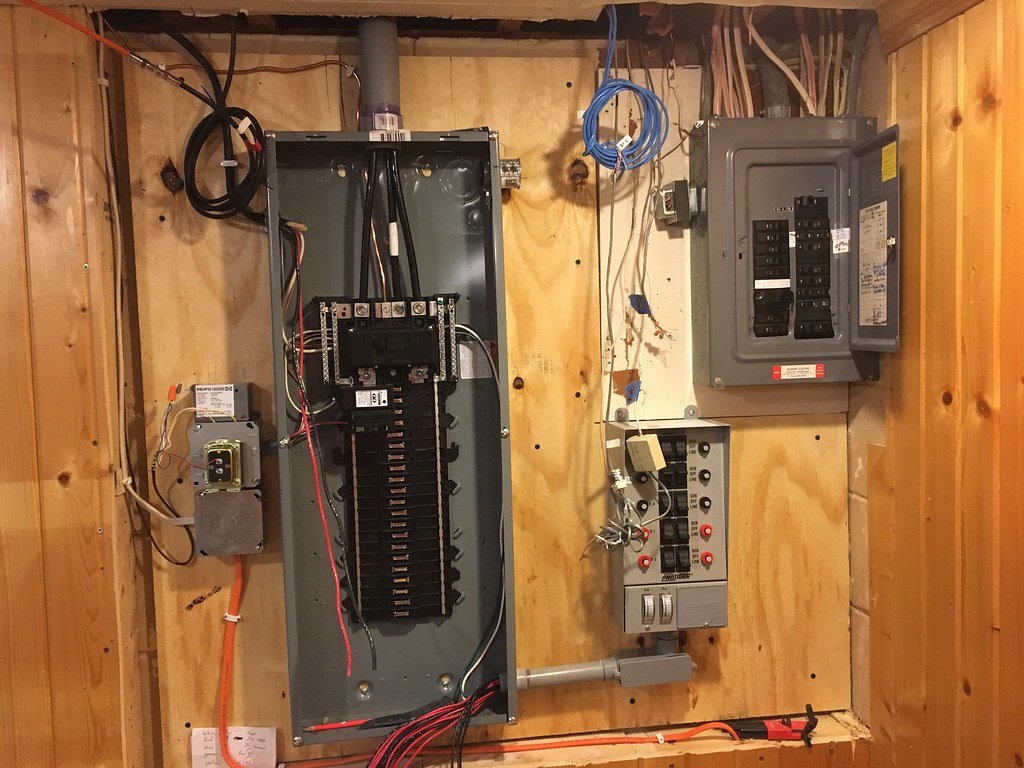
Wiring a subpanel exposes hidden inverter generator disadvantages regarding neutral bonding configurations. Most standard residential backup systems utilize manual transfer switches or panel interlock brackets that connect directly to an exterior power inlet box. The key issue is whether the transfer switch switches the neutral conductor or not.
A transfer switch or interlock kit that does not switch the neutral expects the generator neutral to stay unbonded (floating) because the panel already bonds neutral and ground; a switched-neutral (3-pole) setup generally requires a bonded generator. Check the generator manual and the switch instructions to match them, and have a licensed electrician install the inlet, interlock or transfer switch. Never plug a generator into a wall outlet with a double-male cord. Also verify that the inlet matches the generator’s rated amps (e.g., 20A or 30A). Knowing these inverter generator disadvantages up front avoids wiring surprises on installation day.
Critical Carbon Monoxide Safety and Placement Guidelines
Regardless of whether you operate an inverter or a conventional open-frame unit, exhaust safety demands absolute vigilance. Small inverter mufflers are quiet, which often creates a false sense of security that tempts users to run them under covered patios, open garage bays, or near exterior doors. Doing so risks lethal carbon monoxide accumulation within interior living spaces.
Portable generators must always run at a minimum distance of 20 feet from any occupied structure, keeping exhaust pipes pointed completely away from windows, soffit vents, and door seals, according to the Centers for Disease Control and Prevention guidelines on carbon monoxide safety. Installing battery-backed carbon monoxide detectors on every level of your home provides an indispensable layer of family protection whenever portable engines run outside.
Real-Life Example: Sump Pump Surges and the Inverter Capacity Trap
Here is an illustrative example:
Picture Marcus, a suburban homeowner who bought an ultra-quiet 2,000-watt inverter generator to prepare for seasonal spring storms. When torrential rains knocked out local electrical infrastructure, surface runoff rapidly filled his foundation drain basins. Confident in his investment, Marcus ran heavy extension cords to power his 1/2-horsepower sump pump alongside a modest kitchen refrigerator.
However, Marcus encountered severe inverter generator disadvantages when his basement flooded anyway. The overload protection circuit shut the output off when the sump pump’s initial inductive startup surge spiked past 2,300 watts, cutting power to protect internal components. Because the engine kept humming (not stalling), Marcus incorrectly assumed the pump was running. His storm ordeal confirmed that inverter generator disadvantages cannot be overlooked, as unhandled starting current could leave the basement exposed to water damage until a larger generator was brought in.
To avoid this scenario, choose a unit rated for at least 3,000W surge capacity, use a soft-starter, or opt for a conventional generator. Always use heavy-gauge outdoor-rated extension cords, and place the generator at least 20 feet from your home with exhaust directed away from windows and doors. Following our home-improvement safety checklists provides extra peace of mind during storm season.
Weighing Inverter Generator Pros and Cons Fairly
Acknowledging prominent inverter generator disadvantages allows you to leverage their clean power where they truly excel. Inverter generators run significantly quieter and offer steadier electrical output than conventional models, according to Hunker. High-end inverters operate between 50 and 59 decibels, producing less noise than an average suburban conversation, whereas conventional open-frame models roar at 72 to 82 decibels.
Inverter generators also tend to use less fuel at light loads, according to Hunker, though their electronics can be costlier to repair when they fail. Their clean electrical waveform protects sensitive electronics, laptop power supplies, and delicate medical monitors from voltage ripple damage. Federal guidance from the U.S. Department of Energy on power outage protection underscores the value of matching generator electrical quality to specific household appliance demands. Discovering useful steps on our diy-projects hub will help you construct weatherproof outdoor running enclosures safely.
Frequently Asked Questions
What are the advantages of an inverter generator?
An inverter generator provides exceptionally clean alternating current electricity with low total harmonic distortion, protecting delicate microchips in computers, televisions, and medical equipment. Additionally, inverters adjust engine throttle dynamically based on demand, reducing exhaust noise, consuming significantly less fuel under light electrical loads, and operating in a lightweight, compact footprint that is easy to transport for recreation.
Why is an inverter generator better for sensitive electronics?
An inverter generator is better for sensitive electronics because it digitally synthesizes a pure sine wave rather than relying on raw mechanical engine speed. Conventional generators produce electrical spikes and higher harmonic distortion that can overheat microprocessors and corrupt memory boards. Inverters deliver stable, clean voltage that mirrors standard utility current, keeping sensitive appliances running safely without dangerous thermal stress.
What is the difference between conventional and inverter generator setups for home backup?
The primary difference involves raw electrical output capacity and voltage configuration. Larger conventional generators (roughly 5,000W and up) usually add a 120/240V outlet, while most inverters are 120V only, though some 3,000W+ models and paralleled pairs can reach 240V. Conventional generators are capable of operating heavy home circuits like well pumps, water heaters, and transfer switches. Inverters deliver lower 120-volt running wattage with minimal noise, making them ideal for targeted essentials rather than whole-home backup.
Is an inverter or regular generator better for running heavy appliances?
A regular conventional generator is substantially better for running heavy appliances. Large motor-driven tools, central air conditioners, electric ranges, and high-capacity submersible pumps require large starting surges and often 240V connections, which most portable inverters cannot supply unless they have a 240V outlet or a compatible parallel kit. Regular generators deliver high mechanical torque and large surge overhead at a fraction of the retail cost per watt.
Final Buyer Decision Strategy
Selecting the right backup system requires choosing between clean, quiet efficiency and raw electrical utility. By taking these inverter generator disadvantages into account before buying, you can accurately determine whether a quiet inverter matches your realistic load requirements or if an affordable open-frame model remains the superior choice for your home. Protect your investment by calculating appliance surge ratings accurately, budgeting for proper transfer equipment, and following strict outdoor clearance standards whenever bad weather threatens your power supply.
Sources: Technical reference data informed by Hunker’s analysis of inverter generator downsides, the U.S. Centers for Disease Control and Prevention, and the U.S. Department of Energy.