Most cramped or uncomfortable home offices don’t need more furniture — they need the right five pieces of home office furniture, chosen in the right order. Here’s what’s actually worth buying first, and why comfort should come before style every time, especially if you’re spending six or more hours a day at that desk. Style still matters — a workspace you enjoy looking at is one you’re more likely to actually sit down at — but every piece on this list earns its place on function first.
An Ergonomic Chair, Not Just a ‘Nice’ One
Of all the home office furniture on this list, the chair matters most for your body. Look for adjustable seat height, lumbar support, and armrests that let your elbows rest at roughly a 90-degree angle. A genuinely ergonomic chair runs $200-$500 — more than a decorative accent chair, but it’s the one piece of furniture you’ll spend the most hours in, and the one place it’s genuinely worth spending more for quality. If budget is tight, prioritize adjustable lumbar support over premium upholstery — the support matters far more for comfort than the fabric does.
A Desk Deep Enough for Two Monitors
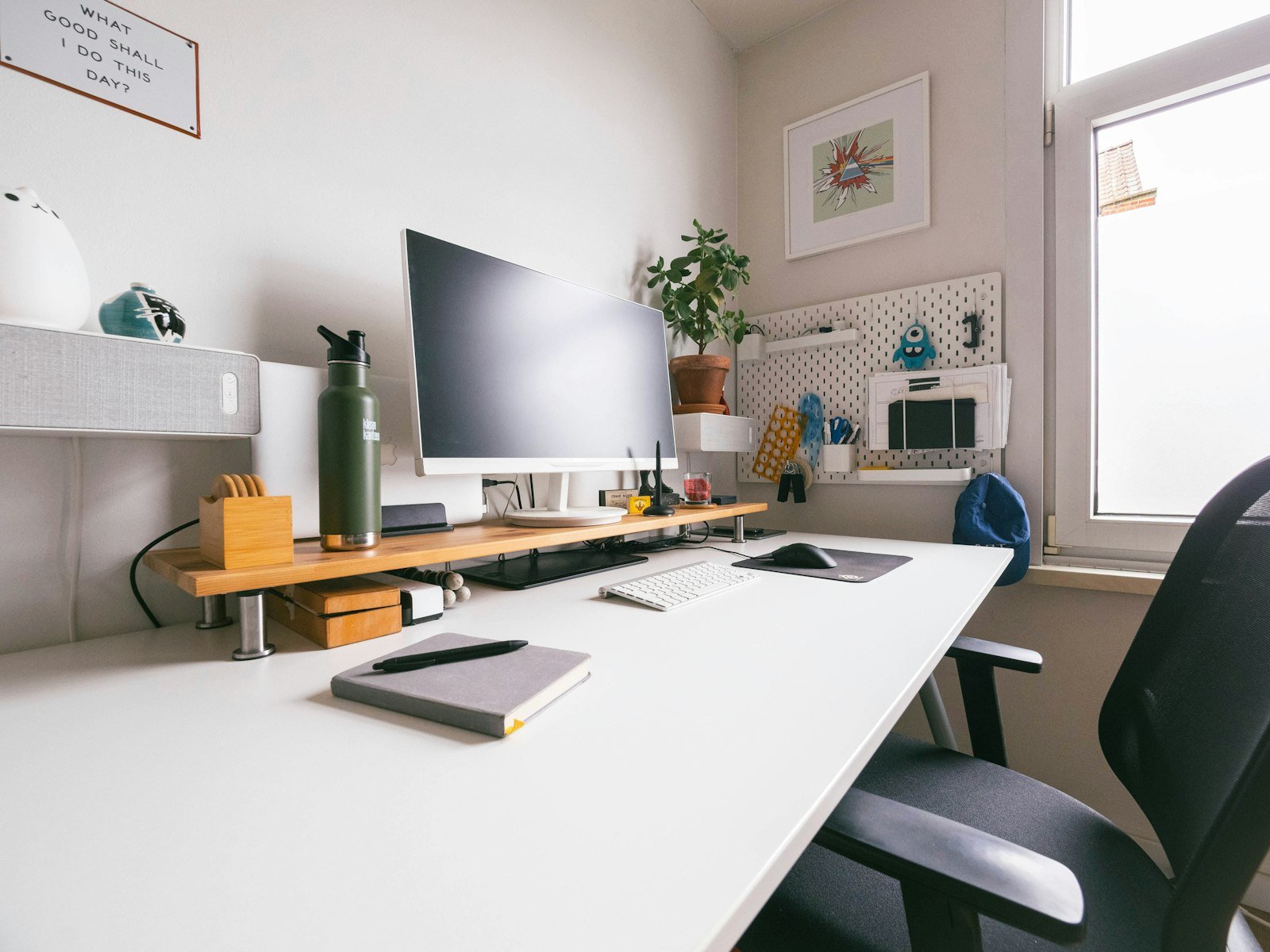
A desk under 24 inches deep forces monitors too close to your eyes. Look for at least 28-30 inches of depth if you use two monitors or a laptop plus an external screen — it also gives you room for a notepad or lamp without crowding your keyboard. A desk that’s too shallow is one of the most common home office furniture mistakes we see in small apartments.
See more compact desk styles that don’t sacrifice depth in our Furniture & Decor archive.
A Monitor Arm or Riser for Neck Health
The top of your monitor should sit at or just below eye level. A $20-$40 monitor riser or a $40-$80 articulating arm fixes this instantly and also frees up desk surface underneath — small home office furniture upgrades like this one make an outsized difference for daily comfort, especially over a full workday of video calls.
The Occupational Safety and Health Administration’s ergonomics guidance specifically calls out monitor height and chair support as two of the highest-impact fixes for a home workstation, which lines up with putting these two items first on this list.
Closed Storage Within Arm’s Reach
A small closed cabinet or a set of drawers beside the desk keeps cables, chargers, and paperwork out of sight without leaving your seat. Closed storage (versus open shelving) matters more in a home office than almost any other room, since visible cords and files read as unfinished work rather than styled decor. A two-drawer rolling cabinet under $100 is often enough for a single-person home office.
A Rug That Defines the Work Zone
If your home office shares a room with another function — a guest room, a corner of the living room — a rug placed under the desk and chair visually defines the workspace as its own zone. It also softens the sound of a rolling chair on hard flooring, which matters more than people expect during video calls, and it’s an easy way to bring in color without committing to paint. A low-pile rug is worth choosing over a plush one here, since it won’t catch on a rolling chair’s wheels the way a thicker pile can.
For more budget-friendly picks across these categories, browse our What to Buy guides.
One More Thing: Cable Management Is Part of the Furniture Plan
A cable tray mounted under the desk, or even a simple binder clip and velcro tie setup, keeps power strips and charging cables from becoming visual clutter the moment everything else is dialed in. It’s inexpensive — usually under $20 — but it’s the detail that makes a home office furniture setup look finished in photos and in person.
Home Office Furniture: Common Questions
Which piece of home office furniture should I buy first on a tight budget?
The ergonomic chair, followed closely by a monitor riser — together they cost less than a new desk and have the most direct effect on daily comfort.
Does home office furniture need to match the rest of the room?
Not exactly, but keeping the wood tones and metal finishes consistent with nearby furniture helps the workspace feel like part of the home rather than a bolted-on cubicle.
Is a standing desk necessary as home office furniture?
It’s optional, not essential. A correctly positioned monitor and a supportive chair address most comfort issues before a standing desk becomes worth the added cost.
Buy in This Order
If you can only buy one or two pieces of home office furniture right now, start with the chair and the monitor riser — they’re the cheapest of the five and have the most direct effect on daily comfort. For more room-specific setups like this one, see the full Home Office category.