Taking five minutes to clean mower deck surfaces with a leaf blower immediately after mowing helps reduce metal corrosion and wet grass buildup, and helps preserve engine performance without using a drop of water. Freshly cut grass clings to the undercarriage within minutes, holding acidic plant moisture directly against raw steel. If you let that sticky layer harden, cleaning becomes a frustrating chore that slowly degrades your mower.
Suburban yards demand reliable equipment, but washing a hot lawn mower with a garden hose often does more harm than good. Water forces its way past rubber seals into spindle bearings, causing premature mechanical failure and surface oxidation. When you learn how to clean mower deck housings with targeted air, you protect sensitive moving parts while keeping your cutting chamber immaculate. For broader home upkeep strategies, explore our practical guides in maintenance and cleaning.
This comprehensive guide details a complete post-mow dry routine designed for push, self-propelled, and small riding mowers, broken down into six numbered steps. You will learn the exact power ratings needed to clear damp thatch, vital engine safety protocols, and how to clean mower deck metal to maintain showroom cutting efficiency all season long.
Why You Should Clean Mower Deck Steel Without Water
Moisture-laden grass clippings stuck to mower decks can induce premature rust and corrosion on metal parts if left uncleaned, according to Hunker. Fresh turf contains natural sap and organic acids that react with bare stamped steel. When wet mulch remains trapped inside the undercarriage for days, it creates a humid micro-climate that eats through paint and oxidizes deck metal from the inside out.
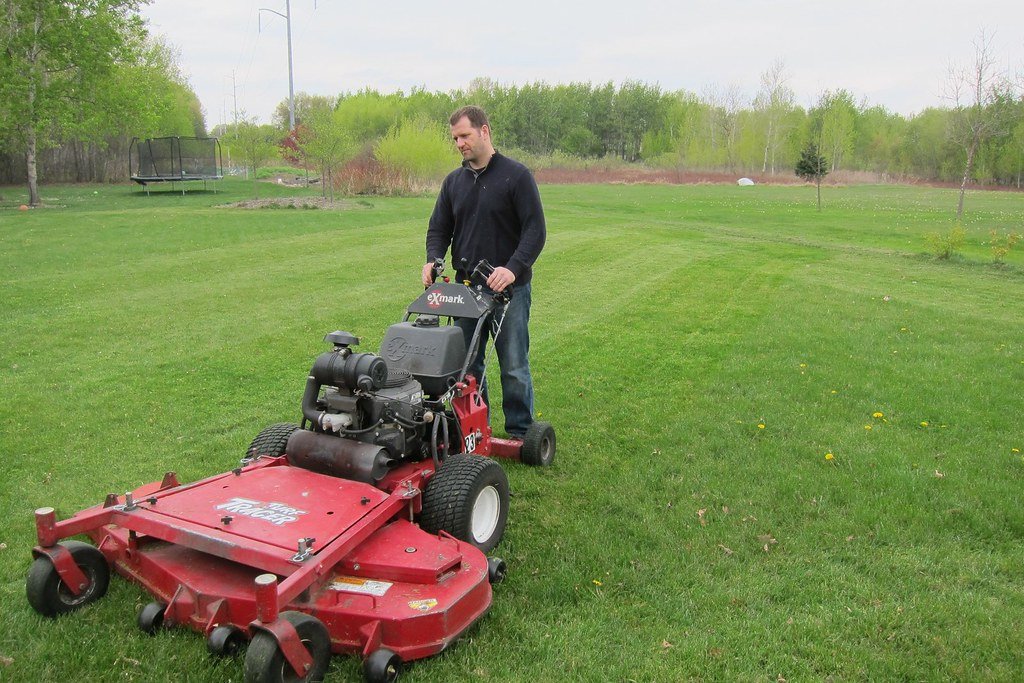
Beyond cosmetic deterioration, accumulated grass clippings, mud, and debris on the deck underside, pulleys, and discharge chute can cause uneven cutting and engine overheating, according to Hunker. A packed cutting chamber chokes airflow, forcing the blade to drag through dense organic sludge rather than cleanly lifting turf leaves. This extra drag strains the engine drive system, dulls the blade edge prematurely, and leaves ragged brown tips across your lawn. Homeowners who consistently clean mower deck chambers enjoy smoother engine operation and crisper turf lines.
While many modern mowers feature built-in garden hose wash ports, relying on water introduces serious mechanical liabilities. High-pressure water droplets wash away grease from sealed blade spindles and belt idler pulleys. Once water enters these bearings, grinding noise and seized shafts can follow. Choosing to clean mower deck assemblies with dry air eliminates moisture risks while whisking away green debris before it cements to steel walls.
Comparison of Undercarriage Cleaning Methods
Homeowners often debate whether forced air, garden hoses, pressure washers, or hand scrapers work best to clean mower deck components during routine lawn care. Each approach presents distinct trade-offs between speed, rust risk, bearing safety, and buildup removal efficiency.
| Cleaning Method | Average Time | Rust & Corrosion Risk | Spindle Bearing Safety | Buildup Removal Power | Water Required |
|---|---|---|---|---|---|
| Leaf Blower Dry Air | 3–5 minutes | Very low | Very good | Superior on fresh grass | 0 Gallons |
| Deck Washout Port | 10–15 minutes | Moderate to High | Fair (Water can breach seals) | Moderate (Misses corners) | 10–20 Gallons |
| Pressure Washing | 20–30 minutes | High (Leaves pooling water) | Poor (Blows past bearing seals) | High on caked mud | 15–30 Gallons |
| Manual Scraper Tool | 15–20 minutes | Low (Dry method) | Good (No seal pressure) | Excellent on hardened thatch | 0 Gallons |
As the comparison reveals, forced air cleaning excels as a routine preventative protocol. It avoids the rust acceleration caused by wet deck wash ports and prevents the bearing destruction linked to pressure washers. When you clean mower deck steel right after cutting, you stop buildup before hardened crusts ever form.
Essential Tools and Materials for Dry Undercarriage Cleaning
Setting up a dedicated station to clean mower deck assemblies requires minimal gear, most of which you likely already own for general yard care. Having these items organized near your shed or garage workspace makes post-mow maintenance seamless.

- Cordless or Electric Leaf Blower ($80–$150): A handheld unit delivering at least 300 CFM provides ample velocity to blast away heavy, sap-rich grass clippings. Cordless lithium-ion models offer instant maneuverability to clean mower deck surfaces without dragging extension cords.
- Plastic Scraper or Flexible Putty Knife ($4–$6): A 2-inch or 3-inch plastic scraper removes occasional damp clumps without gouging factory paint or scratching protective undercoating. Avoid sharp steel chisels when you clean mower deck underside channels so powder coat remains intact.
- Non-Stick Silicone or Ceramic Deck Spray ($7–$18): A quality slip-plate lubricant or silicone barrier spray creates an ultra-slick surface that discourages turf adhesion during future cuts.
- Heavy Leather Work Gloves ($10–$15): Sturdy gloves protect hands from razor-sharp blade edges and jagged twigs caught under the deck lip.
- Impact-Resistant Safety Goggles ($5–$10) and hearing protection: Protective eyewear and ear protection prevent flying debris, dried soil, grass dust, and loud engine noise from injuring your eyes and ears during high-velocity air passes.
Investing roughly $100 to $190 in quality gear to clean mower deck steel pays for itself by extending equipment longevity and preventing expensive spindle replacements. For more smart tool investments, check our curated recommendations in what to buy.
Equipment Specs: Choosing the Right Leaf Blower for Lawn Care
Not every leaf blower delivers the specific airflow characteristics needed to clean mower deck baffles when sticky mulch adheres to steel. Understanding the difference between CFM (Cubic Feet per Minute) and MPH (Miles per Hour) ensures your blower handles damp turf efficiently.
CFM measures the volume of air moved, while MPH measures the speed of that air column. To clean mower deck cavities effectively, CFM is the critical metric. A blower with 300 to 450+ CFM displaces large volumes of air, creating a scouring vortex inside the curved underside.
High air volume physically lifts heavy, wet grass blades out of tight recesses where narrow, high-MPH blasts might merely poke holes through the debris. Look for roughly 300–500 CFM paired with at least 100–150 MPH; many budget cordless models list lower CFM, so check the box specs, since the best-performing units can cost more than $150.
Nozzle geometry also plays a vital role. Standard round nozzles diffuse air over a wide pattern, which works well for clearing open driveways. However, a flat concentrator nozzle narrows the output into a tight, horizontal blade of air. This concentrated stream allows you to direct shearing force directly along deck baffles, around the spindle housing, and down the discharge chute to clean mower deck corners with surgical accuracy.
Vital Pre-Cleaning Safety Protocols (Tipping Rules and Disconnection)
Safety is paramount whenever you position your hands or face near lawn mower cutting components. Gas engine spark plugs must be disconnected and electric mower batteries removed prior to undercarriage cleaning to prevent accidental startup and injury, according to Hunker. Taking these safeguards before you clean mower deck housings ensures complete operator protection.

For gas-powered walk-behind mowers, locate the spark plug on the front or side of the engine block. Firmly grasp the rubber spark plug boot, twist it gently to break the seal, and pull it completely free from the terminal. Tuck the insulated wire safely to the side before you clean mower deck components. For cordless electric mowers, release and remove the primary lithium-ion battery pack and extract the red safety key before proceeding.
Always tip the mower so the air filter and carburetor face upward (usually onto the side opposite the air filter), never backward if that points the carburetor down. Check your owner’s manual for the approved tipping direction, and tip only with a cool engine and ideally a low fuel tank. Push mowers have an internal oil reservoir in the crankcase. If you tip the machine toward the carburetor or air filter side to clean mower deck metal, motor oil will drain through the breather tube, saturating the paper filter element and flooding the carburetor throat.
This oil displacement causes severe engine hydro-lock, messy fuel spills, and heavy blue exhaust smoke on subsequent startups. If you regularly tackle hands-on yard repairs, explore step-by-step techniques in our how-to library.
The 6-Step Routine to Clean Mower Deck Steel
Executing this streamlined six-step routine immediately after cutting ensures damp grass never has the opportunity to dry into a petrified crust. With a beginner difficulty rating, this 5-minute routine to clean mower deck steel preserves your equipment effortlessly.
Step 1: Park on a Flat Surface and Disengage Power
Position your mower on a flat, solid outdoor surface such as a concrete driveway or gravel pad. Turn off the engine or motor. Follow the critical safety protocol: disconnect the spark plug wire boot or eject the lithium-ion battery pack and remove the safety key. Put on leather work gloves, impact-resistant safety goggles, and hearing protection before you clean mower deck areas.
Step 2: Clear the Upper Housing and Cooling Fins
Before tilting the machine, use your leaf blower to clear clippings from the top of the deck, transmission belts, and engine cooling fins. Keep the airflow angled outward and avoid blowing high-pressure dust directly into the air filter intake housing. Clearing the upper deck first prevents loose debris from falling into the blade chamber when you tilt the unit to clean mower deck undersides.
Step 3: Safely Tilt the Machine
Carefully tilt the mower with the carburetor and air filter facing straight up toward the sky. Never prop the mower with bricks, pavers or your body; if it feels unstable, lower it and ask a helper or use a mower lift rated for your machine.
Step 4: Blast Debris With Concentrated Air
Hold the leaf blower nozzle 4 to 6 inches away from the deck surface. Start at the front baffle and work systematically toward the discharge chute. Sweep the high-velocity air across the blade spindle, along curved steel channels, and into the rear wheel lip. Keep children, pets and windows clear of the blown debris. The dry air stream quickly dislodges damp turf ribbons, blowing them harmlessly out the discharge opening as you clean mower deck surfaces.
Step 5: Spot-Scrape Stubborn Residue
A leaf blower cannot fully remove hardened or congealed grass residue from past sessions, necessitating physical scraping with a plastic scraper or putty knife, according to Hunker. If you notice localized patches of bonded thatch, take thirty seconds to gently pop them loose using your plastic putty knife, then deliver a final blower pass to clean mower deck surfaces completely.
Step 6: Lower the Machine and Store Dry
Lower the mower onto all four wheels first, then reconnect the spark plug boot or reinstall the battery and key only when you are ready to mow again. Store your clean mower deck inside a ventilated shed or garage, completely free of trapped organic moisture.
Anti-Stick Undercoating Treatments: Comparison and Application
Coating the surface with WD-40, cooking spray, or silicone spray helps you clean mower deck steel easily by creating a barrier that discourages future grass clumping, according to Hunker. Applying an anti-stick film to clean steel drastically reduces friction, causing fresh clippings to slide across baffles and exit the discharge chute rather than sticking to the deck.
Commercial graphite or ceramic non-stick sprays offer the highest durability among protective treatments. Formulated with bonding resins, these coatings cure into a hard, slippery matrix that withstands high-speed sand and pebble abrasion. It typically lasts several mows; reapply when grass starts sticking, varying by product and conditions.
Expect to pay roughly $7–$18 per can depending on type and brand, but the extended protection saves substantial maintenance time when you clean mower deck steel. Aerosol sprays contain propellants and solvents, so use outdoors, dispose of cans per local rules, and prevent overspray onto lawn. Keep spray off belts, pulleys and brake parts and follow label directions.
Industrial heavy-duty silicone spray serves as an economical, clean alternative. Priced at $7 to $12 per can, silicone creates an ultra-slick, clear hydrophobic barrier that repels water and plant sap. Reapply when grass starts sticking; silicone leaves no sticky residue and will not wash off during damp morning cutting, helping you clean mower deck channels faster. Follow label directions and keep spray off belts, pulleys and brake parts.
Household cooking oil sprays, such as canola or vegetable oil, offer a low-cost DIY option for $3 to $5 per can. Cooking oil is biodegradable but can attract pests and turn gummy over time, attracting dust if overapplied. For long-term equipment preservation, commercial graphite deck coatings or industrial silicone sprays make it far easier to clean mower deck housings over time. Follow label directions and keep spray off belts, pulleys and brake parts.
To apply any treatment, ensure the underside is completely dry and swept clean. Shake the spray can thoroughly, hold it 8 to 10 inches from the steel, and apply an even, light coat over the entire underside, paying special attention to the curved discharge tunnel. Allow the coating to flash dry for 10 minutes before operating the mower.
Common Mistakes to Avoid During Dry Undercarriage Cleaning
- Blasting Air Directly Into Air Cleaner Housings: While clearing the upper deck is essential, never point a leaf blower nozzle directly into the carburetor air intake shroud. Forced air can push fine dust particles straight through the paper air filter into the engine cylinder, causing internal scoring and premature engine failure when you clean mower deck assemblies.
- Using Pressure Washers on Spindle Assemblies: High-pressure water easily penetrates sealed ball bearings supporting the cutting blade. Once bearing grease is emulsified with water, the bearings will overheat, squeal loudly, and eventually seize, proving why you should clean mower deck parts with dry air instead.
- Tilting the Mower Carburetor-Down: Forgetting the air filter tipping rule is the most common cause of no-start issues after cleaning. Inverting a push mower toward the carburetor side fills the air box with crankcase oil, ruining the filter and fouling the spark plug.
- Allowing Wet Grass to Dry Overnight: Fresh clippings contain moisture that acts like industrial paste once dried. Waiting until the next day turns a quick 5-minute air sweep into an exhausting 30-minute scraping session. Always clean mower deck surfaces immediately after mowing while grass remains pliable.
- Working With Power Connected: A connected spark plug or installed battery can let the engine fire or the motor start if the blade or flywheel turns, which can cause severe injuries. Always disconnect first.
Discovering smart ways to maintain your outdoor power gear and clean mower deck steel makes weekend yard work easier and safer. For creative DIY workshop storage ideas, browse our helpful tutorials in DIY projects.
Real-Life Example: How a Dry Cleaning Routine Saved a Stamped Steel Deck
Picture Marcus, a suburban homeowner in Ohio who purchased a new self-propelled mower with a heavy stamped steel deck. During his first spring season, Marcus used the hose washout port after every Saturday mow to clean mower deck steel. Within two months, he noticed deep rust blisters erupting beneath the peeling paint, and a foul, wet-hay odor filled his storage shed all week.
Worse, the mower began vibrating heavily due to hardened clumps of wet mulch clinging behind the front baffles, causing uneven cutting stripes across his front lawn. Frustrated by the corrosion, Marcus stopped using water entirely. He picked up an inexpensive plastic scraper and adopted a strict 5-minute routine using his cordless leaf blower immediately after cutting, using forced air to clean mower deck baffles and treating the steel with silicone spray.
The transformation was dramatic. The deck remained completely free of rust all summer, cutting airflow improved visibly, and the vibration vanished. By switching to forced air to clean mower deck components, Marcus preserved his deck metal and eliminated messy hose cleanups for good.
Seasonal Deep Cleaning and Winter Storage Preparation
While a 5-minute leaf blower dry-clean handles weekly lawn duties, seasonal transitions call for deeper inspection. At mid-season and before winter storage, take time to perform a thorough undercarriage checkup and clean mower deck steel from end to end.
At the end of autumn, disconnect the spark plug or battery, tip the mower safely, and use a stiff nylon brush and plastic scraper to remove any stubborn, petrified residue that accumulated over months of mowing. Clean mower deck channels thoroughly, then inspect the metal for stone chips, scratches, or minor surface rust spots.
If you find exposed bare metal, lightly sand the affected areas with 120-grit sandpaper, wipe away grit with mineral spirits, and apply a coat of rust-inhibiting metal primer followed by heavy-duty enamel spray paint. Work outdoors, wear a respirator and gloves when sanding or spraying, keep mineral spirits and aerosols away from flames and hot engines, and follow label directions. Finish your seasonal prep by spraying a heavy protective barrier of commercial graphite slip coating across the entire underside after you clean mower deck steel. Storing your machine clean, painted, and dry helps your mower start the season in better shape.
Frequently Asked Questions
Can you clean mower deck areas with a leaf blower when grass is wet?
Yes, a leaf blower can clean mower deck surfaces after cutting damp grass, provided you clean immediately after finishing. High-velocity air shears fresh, pliable clippings away easily. However, if wet grass is allowed to dry for several hours, it congeals into a stubborn crust that requires physical scraping with a plastic putty knife before air will move it.
Will using a leaf blower damage mower spindle bearings or belts?
Dry air is very unlikely to damage spindle bearings or drive belts. Unlike high-pressure water, which forces past rubber bearing seals and washes out lubricating grease, air does not force moisture past the seals. Just avoid holding high-pressure nozzles directly against delicate throttle linkages or directly into the carburetor air filter intake.
How often should you clean mower deck housings during cutting season?
You should clean mower deck undersides after every single mowing session. Spending three to five minutes clearing fresh debris with air after each cut takes minimal effort and prevents grass buildup from hardening. Consistent dry cleaning preserves factory deck paint, prevents corrosion, and maintains maximum cutting airflow all season.
What should you spray under a mower deck to stop grass sticking?
Commercial graphite deck spray or industrial silicone lubricant spray provides the most effective protection against grass buildup. These aerosol treatments create an ultra-slick, hydrophobic coating that discourages green mulch from adhering to stamped steel. Apply a light, even coat to clean, dry metal, keeping spray off belts, pulleys and brake parts. It typically lasts several mows; reapply when grass starts sticking, varying by product and conditions.
Sources
Maintenance techniques and mechanical guidelines referenced in this article are based on lawn care recommendations from Hunker’s Lawn Mower Deck Guide, along with equipment maintenance standards published by Briggs & Stratton Engine Maintenance and consumer equipment research from Consumer Reports Lawn Mower Care.